

Whenever readers and history enthusiasts discover the appalling corners of the Russian revolution and the ideas of Marxism and along with it, the brutal atrocities like Mao China or the famine under Stalin and Co. The picture that gets painted in the mind of the reader is a rather confusing yet interesting one. But further inspection, one very often than not might recognize and consider Marx to be a true hero, Someone who stood up for equality against the oppressive elite, A revolutionary thinker who predicted the shortcomings of capitalism before it even took its course completely. Marx sure was a revolutionary thinker, And he contributed a lot in how we think of capitalism and is the most effective critique of it. But these conceptions don’t fall in alignment with the historical version of communism and The atrocities it has produced in the last 100 years. Now before you head to the comments storming about how “IT-WASNT-REAL-COMMUNISM!!1”, I understand that argument but since my concern here isn’t a historical one I won’t try to prove how that is the case. Instead, I will study the theory of Marx and link it to how it can lead to such results even when the angelic-rightful-version of communism is practiced.
Equality of Outcome
I’ll start with what Karl Marx really dispises about capitalism; equality. Or lack thereof. Marx looks at the average life of the factory worker in a factory and expresses how the worker is getting exploited by his employer because the employer makes a profit off of him. Marx viewed capitalism as a class system where the rich or the bourgeoisie inherited all wealth and exploited the workers. What Marx did not keep in account was that capitalism is a merit-based system. Not a class one. The workers too can accumulate enough wealth capital and redistribute it. Which if you look around today. Most of the richest men aren’t the ones who inherited wealth but created it.
The Marxist solution to inequality is that the articles of commerce should be distributed equally among the workers, That there should be no hierarchy on which society should be organized. Everyone has equal access to goods regardless of whether they worked as much as others to accumulate it; Equality of outcome.
The problem with equality of outcome in any creative endeavor is that it doesn’t work, it cannot work. Some people are better at certain traits and those traits matter in certain domains. Hence in any competition, the outcome of results is never distributed equally in a fair game, it has no reason to. To understand this in an analogy, Picture a classroom with 100 students. Now picture all the students who get A+ grades. They will be a tiny minority of the classroom, hardly 6%. Does this mean that the ones getting an A+ grade are ruling over the ones getting C’s? Does this mean that the ones on top have some sort of power relation with the teacher because they are the only ones on top? Should they be obliged to “share” their grades to make up for the inequality they have caused in the classroom. And the worst of all should we destroy the idea of grades and distribute test answers among all students equally even when a tiny majority is working 5x harder than everyone else.
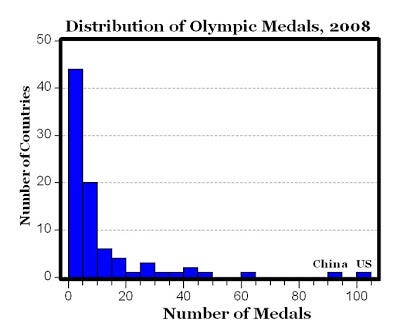
Now I am not saying that the richest 1% today don’t lobby politicians or abuse the wages of their workers to maximize profit or find new methods to hide their wealth to avoid taxes- they do all of that. but the solution to that is not to abolish the whole system or even worse the idea of money or value itself.
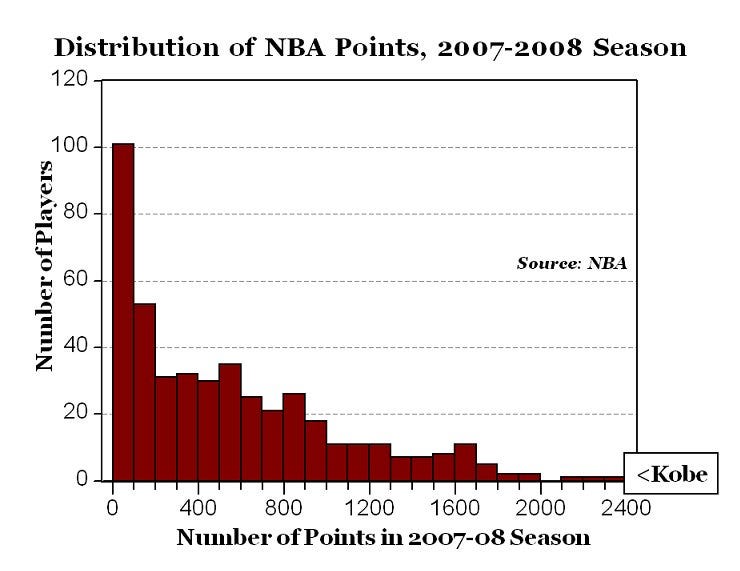
Marx fails to recognize how capitalism works and what causes inequality in any creative endeavor. Take the top 10% of football goal scorers in 2018 in Europe and take the sum of their goals and compare it the bottom 90%…. They may be way off and totally ‘unequal’ but there’s not plutocracy or agenda going on in football goals as far as I am concerned. They are earned by those who specialize in that creative endeavor and thus cause inequality. Similarly, take the top 10% artists who sold most records in 2018 and compare them to the rest and so on…..
The nature of work
Marx argued that Capitalism in the dawn of Industrial revolution was repressive and sucked the blood out of the worker. That the life of the average man had dissolved into nothing but tired hopeless work. Which rendered the life of the worker meaningless, something he referred to as alienation.
Marx’s solution to this was that work is not necessary in today’s society (He proposed work as something that fulfills man too but that wasn’t the work that creates capital) because of how efficient our economy is. We can just provide everyone with goods and services as not all people need to work in the means of production, the instant problem with is that people who are working more are inherently getting less as they work more and get the same amount. If they get more and work more that creates an elitist cycle and a dominant group which is exactly what communism is against. if they work more and get less that too creates an inequality which is also what communism is exactly against…… The Marxist approach to equality is unachievable.
And what happens when you adopt the ultra-egalitarian ideals of communism to the economy is that nobody has to work any harder to earn what they deserve. Now it goes without saying that Marx envisioned a utopia in which the human way of thinking would change too. According to him capitalism has corrupted our minds and ideals and how we think about value in general. But arguably its an evolutionary inherent trait of humans to improve with competition in any endeavor and not just the markets its a trait which is even found in animals; the ability to grow and adapt to fit the competition.
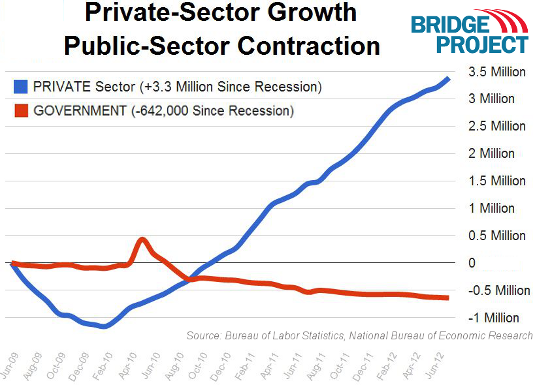
A modern day example would be why the private capitalist sector is always so much more productive than the government sector in a country. The private sector always has a competition to compete with within its own domain in capitalism unlike the government sector which has doesn’t have challenging objectives which change in respect to competition.
From each according to his ability, to each according to his needs.
On surface, this sounds like the perfect utopian ideal. Where no one works harder than they can, And no one consumes more than what they need. But who constitutes those definitions and limits of consumption is a bigger problem to solve. And the mere fact that ability in humans is something that is pushed and not a constant thing. And without need or competition that ability will be limited as in respect to how much it can be.
Authoritarianism
One of the greatest criticism against communism is usually that the millions of people that were killed in the USSR and other atrocities under communist regimes. The usual response to this by socialists is that ‘that wasn’t real communism’. But anyone who’s read the manifesto can conclude how the deaths of millions actually have something to do with the theory of Marx. Let’s begin with the idea that power should be distributed among the people. Marx wanted to disrupt the political and monetary hold of the bourgeoise and give it to the people. One presupposition that comes with that demand is that a state can be run by all people at once. The way historically this has been tried to achieve is by giving the state all the power and resources and The means of production so that they can redistribute it. Now according to Marx in communist countries the people run the country, But that isn’t practically possible by any stretch of the imagination, You cannot have direct democracy for the same reason; every person cannot run the state at the same time. So you need to have a leader. You cannot have a revolution without a leader. And it goes without saying that no leader is perfect. And communism, with its promise of redistributing all articles of commerce, gives virtually every power to the leader which eventually becomes a dictator. So it’s not surprising that the most brutal dictators in history were aftermaths of Marx utopian dream. Much has been talked about a democratic socialism or Marxism ever since. The problem with that is that even with socialistic programs like a housing scheme you still at the core will deal with the same problem. For example imagine a housing society that’s owned equally by everyone living in it. Now if you want to make any changes to your home everyone in the society will have to agree with you for you to make changes to your own home. And this is true in all aspects of life in communism. The abolition of private ownership is the death of your control over what you own- since you own nothing. Which taps into a bigger debate of individualism vs collectivism, and is precisely the problem with all such collective utopian dreams. The dream for a better future looks different for everyone in society. And adopting not only a way of life but the core values for a whole society to function socially and economically based on one man’s ideals and the state’s decision on how that dream will be achieved tells us that the sacrifices of freedom in communist societies and the death of freedom of speech is nothing foreign to the theory of communism, and is not the “not real communism”.
Radical Revolutionary Fervor
Even after discussing lets just call them “loopholes” in marx’s ideology from which violence can manifest itself in communist regimes and revolutions. It stays unclear that how can a theory that was meant on the promise of libertarian ideals such as justice & equality for all, How does it always erupt into and even initiated from brutal acts of slaughter and human rights violations.
Marx’s desires in the communist manifesto are clearly stated with “overthrowing the bourgeoise class” and how all proletariats and communists of all nations should unite to strip the bourgeoise off of their wealth and distribute it to the community.
“Workers of the world unite!”
One very accurate portrayal of how this plays out in an actual revolution is what happened to the Kulaks in the USSR. The rich peasant farmers who produced a large percentage of agriculture for Russia and Ukraine were seen as a threat to the communist part by stalin so he stripped them off of any power and shipped them to siberia during the collectivization in the early 1930s. Which later caused the famine and extreme shortage of food in USSR which resulted in an estimated 5 million people starving to death.
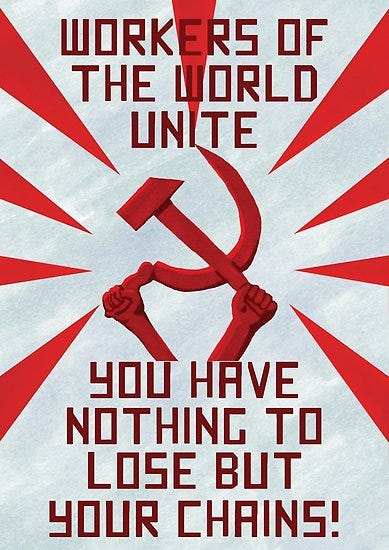
Marx separates the working class and the owners of property and means of production into 2 separate social classes portraying that capitalism is a class-based system. When in reality capitalism does not care about who accumulates wealth.
“the history of all hitherto existing society is the history of class struggles”
The Marxist view of history is an ongoing fight between the working class and the bourgeoisie, the patrician vs the plebian, the oppressor vs the oppressed.
Its clear that when marx talks about overthrowing the property owners he quite definitely means a full-blown war-like revolution. (How else can you steal all wealth and means of production literally and distribute it)
Thus it comes with no surprise that the utopian vision of a man whose world view is shaped around a distorted and limited perspective went on to become one of the most repressive, brutal and dogmatic political ideologies the world has seen.
This results on the individuals level is an ingenious feeling of being oppressed and a constant hatred against anyone who’s in a better position than you in any domain. Which has shown itself to be true throughout the history of communism and even today in young activists who think their employer paying them $10 an hour is oppression and wearing a Che Guevara T shirt makes them a damn activist.
Final Words
Marx was one of the first philosophers I was exposed to. And his writings seemed influential to me for some time as they do to many other teenagers when they read him for the first time. In a way it confirms the doubts you already had about capitalism but in a more extreme way that seems appropriate especially for young men looking to get behind something rebellious and different.
One thing we’ve got to give Marx credit for is recognizing some of the deepest issues in capitalism and how it will affect our society way before they truly did. And perhaps his criticism would be a key role in transforming capitalism in the future. But his alternative for capitalism should be left behind in it- if that isn’t obvious enough.
Comments
Post a Comment